
Vape Meaning Explained Through Device Mechanics
When someone types vape near me into a search bar, they are usually looking for a local source of hardware or supplies. But before you can choose a device, it helps to understand what the word actually describes. Put simply, a vape is an electronic device that heats a liquid to produce an aerosol, which the user then inhales. The device does not burn tobacco; it vaporises a formulated e-liquid through controlled thermal action.
This explanation focuses on the mechanics inside the device rather than marketing language. By the end, you will understand each component, how energy moves through the system, and why the same word covers everything from a small disposable unit to a refillable pod kit. That knowledge makes it easier to ask the right questions at a vape shop or when comparing listings online.
The Basic Mechanism: What Happens Inside a Vape
Every vape works on the same fundamental principle: electrical energy becomes heat, heat becomes aerosol. A power source, usually a battery, sends current through a resistive wire. That wire is wrapped into a coil and placed in contact with a wick soaked in e-liquid. When current flows, the coil heats up and the liquid on the wick turns into a fine mist. The user’s inhalation pulls that mist through a channel and out of the mouthpiece.
There is no combustion in this process. The temperature is high enough to aerosolise the liquid but not to set it on fire. That distinction is the core of the vape meaning: a device that delivers nicotine or flavour without burning plant material. The aerosol is made of droplets, not smoke, which is why the engineering focuses on wick saturation, airflow, and coil temperature rather than fuel and flame.
Understanding this loop explains why devices differ so much. A small disposable vape and a larger refillable mod both run the same sequence, but they scale the battery, the coil mass, and the liquid capacity differently. The next sections break that sequence into labelled parts.
Component Walkthrough: The Parts That Make a Vape Work
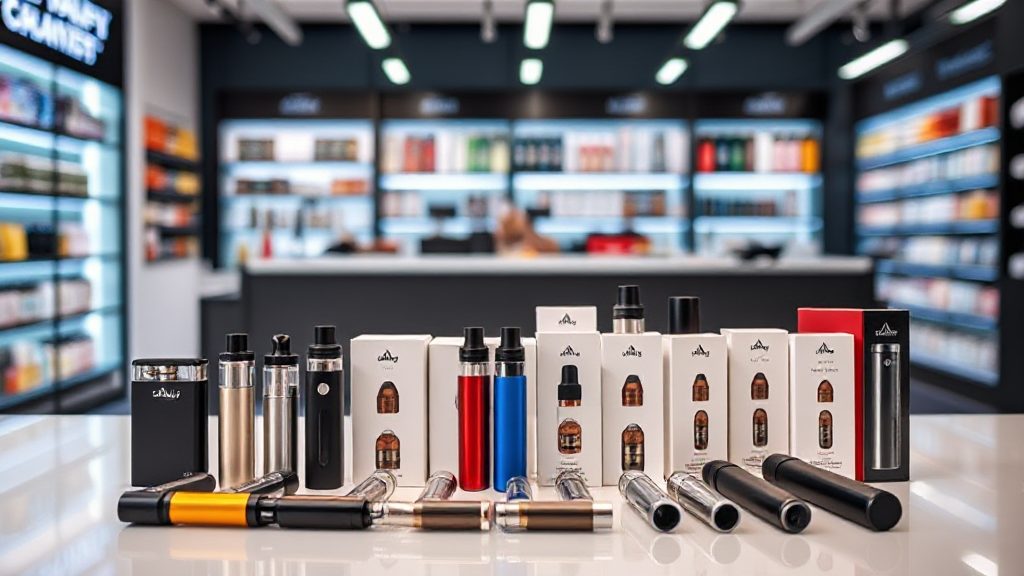
If you could open a typical vape and lay the parts on a table, you would see five functional groups. Each one has a clear job, and each one affects how the device performs in daily use.
Power Source and Control Circuit
The battery stores electrical energy. In disposables it is usually a small lithium cell sealed inside the housing. In refillable pod kits, the battery is rechargeable through a USB port and managed by a circuit board. That board regulates output, prevents overheating, and often includes a safety cutoff if the button is held too long. The control circuit is what turns a raw battery into a stable, repeatable heat source.
Atomiser: Coil and Wick
The atomiser is the heart of the device. A coil of resistance wire, often kanthal or stainless steel, wraps around a wick made of cotton or a porous ceramic. The wick draws liquid from the reservoir by capillary action. When the coil heats, liquid at the wick surface aerosolises. If the wick is dry, the coil overheats and produces a harsh taste; that failure mode is called a dry hit and is one reason saturation matters.
E-Liquid Reservoir
The reservoir holds the liquid before it reaches the wick. In a disposable, the reservoir is a saturated foam or tank sealed inside the unit. In a pod kit, it is a refillable cartridge or a glass tank. Capacity determines how long you can use the device between refills, and the design of the reservoir affects how reliably liquid reaches the wick when the device is tilted or stored.
Airflow Path and Mouthpiece
Air enters through one or more inlet holes, passes the coil, and carries aerosol to the mouthpiece. The size of those inlets controls draw resistance: a tight inlet mimics the feel of a cigarette, while a wider inlet allows a looser, airier draw. The mouthpiece shapes the aerosol before it reaches your mouth and is often the part that determines comfort during longer sessions.
Housing and Safety Features
The housing holds everything together and protects the user from heat and electrical contact. Good designs include venting, insulation around the battery, and a sealed path between the reservoir and the electronics. These features are not visible in normal use, but they are the difference between a device that behaves predictably and one that leaks or overheats.
A Simple Diagram in Words: Following the Energy Path
Imagine a line drawing with four boxes arranged left to right. Box one is the battery, labelled with a plus and minus terminal. An arrow leaves the battery and enters box two, the control circuit, which is drawn as a small switch with a sensor line. From the circuit, an arrow goes to box three, the atomiser, shown as a coil wrapped around a wick. A second arrow enters the atomiser from below, representing liquid rising from the reservoir. The final arrow leaves the atomiser and passes through a tube to box four, the mouthpiece, where the aerosol exits. meaning of vape
Around the atomiser, draw a dashed line representing airflow: air enters at the bottom, mixes with the aerosol at the coil, and travels up the tube. This single diagram captures the whole mechanism. Every vape, from a compact elf bar to a larger refillable kit, can be mapped onto those four boxes. The differences are in the size of each box and the materials used, not in the sequence itself.
When you look at a device with this diagram in mind, specifications start to make sense. A larger battery means more sessions between charges. A bigger coil means more liquid is vaporised per puff. A wider airflow path means a cooler, less concentrated aerosol. The diagram turns a list of features into a set of mechanical trade-offs.
Disposable vs Refillable: Same Mechanism, Different Architecture
Both device types use the same four-stage energy path, but they package it differently. A disposable vape arrives pre-filled and pre-charged. The battery, reservoir, coil, and mouthpiece are sealed in one housing, and the unit is discarded when the liquid or charge runs out. This architecture removes maintenance: there is no refilling, no coil replacement, and no charging cable. The trade-off is that you cannot adjust power, swap flavours mid-unit, or replace a single worn part.
A refillable pod kit separates the consumable parts from the durable ones. The battery and control circuit are reusable; the pod or tank holds the liquid and contains the coil. When the coil wears out, you replace the pod or the coil head rather than the whole device. This architecture costs more upfront but gives you control over liquid choice, nicotine strength, and coil resistance. It also produces less waste per session because the battery is not thrown away with every pod.
For a buyer, the choice comes down to how much control you want versus how much convenience you need. If you want to understand what is the meaning of vape in practical terms, compare the two architectures side by side and note which parts are consumable and which are durable. That comparison is more useful than any single specification.
What the Mechanism Means for Cost and Local Availability
Because the mechanism is modular, cost tracks the number of durable parts. A disposable vape bundles a battery, coil, reservoir, and housing into one purchase, so the price reflects the whole assembly. A refillable kit spreads the battery cost across many sessions, but you pay separately for pods, coils, and e-liquid. Neither is automatically cheaper; the better value depends on how often you use the device and whether you prefer to replace parts or whole units.
In Kenya, prices vary with device type, brand, and whether the unit is disposable or refillable. Shoppers often search for vape price in kenya to compare listings, and the same mechanical logic applies: a device with a larger battery and bigger reservoir generally costs more than a compact disposable. If you are weighing a simple starter device, checking vape pen price in kenya alongside disposable prices gives a clearer picture of the entry point.
Availability also follows the architecture. Disposables are sold as sealed units, so stock rotates with flavour and brand. Refillable systems require a supply of pods, coils, and liquid, which means the shop you choose needs to carry compatible consumables. That is why it helps to look for a vape shop near me that stocks both the device and the parts it uses, rather than only the hardware.
Online retail has made this easier in Nairobi and across Kenya. A search for vape shops nairobi or vapes nairobi returns both physical and online sellers, and delivery options matter as much as price. When comparing, check whether the seller lists compatible coils and pods for the device you are considering, because a cheap device with no available consumables is a false economy.
Reading a Device Like an Engineer: Practical Checks Before You Buy
Once you understand the mechanism, you can evaluate a device by asking a few mechanical questions. These checks apply whether you are browsing vape in kenya listings or standing at a counter.
- Battery and charging: Is the battery rechargeable, and what connector does it use? A sealed disposable has no charging port; a pod kit should specify its charging method and expected charge time.
- Coil resistance and power: Lower resistance generally means more aerosol per puff and more battery drain. Match the coil to the device’s power output rather than assuming lower is better.
- Reservoir capacity: A larger reservoir means fewer refills but a bulkier device. For a pocket-friendly unit, capacity and housing size trade off directly.
- Airflow adjustment: If the device offers adjustable airflow, you can tune draw resistance to your preference. Fixed airflow is simpler but less flexible.
- Consumable availability: For refillable systems, confirm that pods or coils are stocked locally. A device is only as useful as its replacement parts.
Flavour choice is a separate variable from mechanics, but it interacts with the atomiser. Some vape flavours contain sweeteners that caramelise on the coil faster, which shortens coil life. If you prefer dessert or fruit profiles, plan to replace coils or pods more often. This is a mechanical consequence, not a brand issue, and it is worth factoring into the running cost.
Finally, treat nicotine strength as a formulation choice rather than a hardware one. The device delivers whatever liquid it is given; the concentration is set by the e-liquid, not the coil. Buyers often ask how much is vape in kenya without separating device cost from liquid cost, but the two are distinct purchases in a refillable system. Keeping them separate makes budgeting clearer.
The word vape describes a mechanism, not a single product. A battery drives current through a coil, a wick feeds liquid to that coil, and airflow carries the resulting aerosol to the mouthpiece. Disposables seal those parts into one unit; refillables separate the durable battery from the consumable pod. Once you can trace that energy path, specifications stop being marketing language and become a set of predictable trade-offs you can compare before you buy. For adult users in Kenya, that mechanical literacy is the most useful thing you can bring to a vape shop search or an online order.