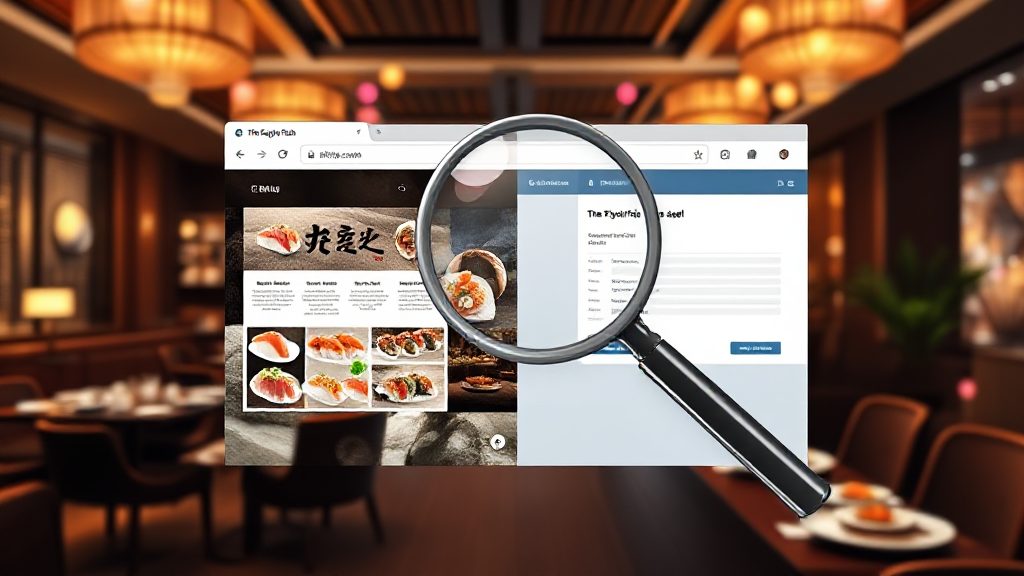

Same Website, Two Different Pages: What Visitors Should Know
Visitors who search for meme4d daftar sometimes land on a restaurant website that seems to have nothing to do with the term. The same domain can display a sushi menu in one place and an unrelated registration page in another. This explainer walks through why that happens, what it means for you as a visitor, and how to confirm you are on the page you actually wanted.
The short answer: a domain is just an address, not a guarantee of content. A site can host multiple pages built at different times, by different people, for different purposes. Your job as a visitor is to read the page in front of you, not the domain name alone.
Why One Domain Can Show Two Very Different Pages
A website is a folder of files served from a single address. Nothing forces every file in that folder to share a theme. When a site changes hands, adds a section, or leaves an old page live, the domain keeps serving whatever is stored there. That is how a Japanese restaurant and an unrelated registration page can coexist under one name.
Three common patterns explain most cases:
- Leftover pages from an earlier owner or project that were never removed after the site was repurposed.
- Separate sections built for different audiences, such as a public menu area and a page created for a campaign or test.
- Template or placeholder content that was uploaded and indexed before the real site was finished.
None of these require a technical fault. They are ordinary side effects of how websites are assembled and maintained over time.
What “meme4d daftar” Usually Signals on a Page
The phrase combines a brand-like token with a word that commonly means “register” or “sign up” in Indonesian and Malay usage. On the web, that combination tends to appear on pages inviting visitors to create an account. When such a page sits on a domain that otherwise presents restaurant content, the mismatch is the story, not the phrase itself.
For a diner, the practical takeaway is simple: the phrase tells you what that specific page is about, not what the whole website is about. A domain can contain a page with that wording and still be, at its core, a restaurant site with a menu, reservations, and a dining room.
This is why reading the page content matters more than reading the URL. The URL identifies where you are; the headings, images, and text tell you what you are looking at.
How to Tell Which Page You Have Actually Opened
Verification takes less than a minute. Work through these checks in order and you will almost always know whether you are on the page you intended.
- Read the main heading first. A restaurant menu page will name dishes, sections, or the restaurant itself. A registration page will ask you to create an account.
- Look at the navigation bar. Menus, reservations, gallery, and contact links point to a hospitality site. Account or sign-up links point elsewhere.
- Check the page title in your browser tab. It usually summarizes the page’s purpose in a few words.
- Scan the footer. Business name, address, and hours are typical of a restaurant; generic legal text is typical of a template page.
- Confirm the exact path. Two pages on the same domain can differ only after the slash, so the full address matters.
If the page fails these checks, you are probably on a different section than the one you wanted. Use the site navigation to return to the area you intended to browse.
What This Means for Diners Looking for a Menu
If your goal is food, the reliable path is to go through the restaurant’s own navigation rather than a search result that may point to an unrelated page. The Flying Fish, a Japanese restaurant in Richmond Hill, publishes its menu, order, reservation, and gallery sections as part of its main site. Those sections are the ones a diner should use.
When you arrive through a search engine, pause before clicking anything that asks for personal details. A menu page should show dishes, prices, and descriptions. If it instead asks you to register, you have found a different page and can safely navigate away.
This habit protects your time and your information. It also keeps you focused on the reason you visited: choosing sushi, sashimi, or a table for dinner.
Common Mistakes Visitors Make With Shared Domains
Most confusion comes from a handful of predictable habits. Avoiding them makes the web feel much less mysterious.
Assuming the domain defines the content
A domain is a container. It can hold a menu, a blog post, an old campaign page, and a placeholder at the same time. Judge each page on its own.
Trusting the search snippet over the page
Snippets are generated from page text and can describe an old or secondary section. The live page is the authority.
Ignoring the path after the slash
Two URLs that look identical at a glance can lead to completely different content. Read the full address before entering details.
Treating an unrelated page as the whole brand
One stray page does not redefine a business. A restaurant remains a restaurant even if an unrelated registration page sits somewhere on its domain.
A Short Verification Checklist Before You Act
Use this checklist whenever a page’s purpose is unclear. It is designed for non-technical visitors and takes only a moment.
| Check | What a restaurant page shows | What an unrelated page shows |
|---|---|---|
| Main heading | Dishes, menu sections, restaurant name | Sign-up or account wording |
| Navigation | Menu, order, reservations, gallery | Register, log in, submit |
| Footer | Address, hours, contact | Generic or minimal text |
| Forms | Reservation or contact form | Account creation fields |
If the page matches the right-hand column and you wanted the left, close it and return to the site’s main navigation. No further action is needed.
For diners who simply want to see what is available, the safest route is to start from the restaurant’s published menu and move outward from there. That keeps you on the pages the business actually maintains for customers.
Frequently Asked Questions
Why does the same website show a restaurant menu and an unrelated registration page?
Because a domain can host many pages created at different times. Old pages, test pages, and separate sections often remain live after a site changes focus. The domain stays the same while the content behind each path differs.
Is a page labeled “meme4d daftar” part of the restaurant?
Not necessarily. The label describes that page’s purpose, which is typically account registration. It does not describe the restaurant’s menu, reservations, or dining services. Treat each page according to what it actually contains.
How can I be sure I am on the right menu page?
Check the heading, navigation, and footer. A genuine menu page lists dishes and prices and links to reservations or ordering. If you see account creation instead, you are on a different page and can navigate back.
Should I enter personal details on a page I did not expect?
No. If a page asks for information and its purpose does not match what you were looking for, leave it. Return to the site’s main navigation and continue from a page you trust.
Does one unrelated page change what the restaurant offers?
No. A restaurant’s services are defined by its menu, kitchen, and dining room, not by every file stored on its domain. Use the restaurant’s own sections to see what it actually provides.