
Why One Clog Reaches Every Unit in a Casa Verde Building
Picture a Casa Verde low-rise where your own kitchen sink drains perfectly, your bathroom never gurgles, and your floor drain stays dry. Then the neighbor one floor up runs the washing machine, and dirty water rises in your shower. Nothing in your unit changed, yet the problem arrived from above. The explanation is not bad luck or a careless neighbor; it is the way the building’s drainage system is built. If you need to understand who is responsible and what to do next, the first practical step is calling a desentupidora Freguesia do Ó São Paulo SP that knows these older low-rise stacks.
This article looks at the building as one connected system: from your unit, into the vertical stack, through the venting, and down to the building drain. Once you see that chain, the backflow makes sense and the shared responsibility becomes easier to accept.
How a Unit Connects to the Stack
Every sink, shower, toilet, and floor drain in your apartment connects to a branch line that slopes toward a vertical pipe called the stack. In a Casa Verde low-rise, that stack usually serves all units on the same line, from the top floor down to the ground. Water and waste do not travel independently; they share the same vertical path.
When the stack is clear, each branch drains by gravity and air pressure stays balanced. When something blocks the stack below your unit, the water from above has nowhere to go. It backs up into the lowest open connection, which is often a shower drain or a floor drain in a lower apartment. That is why your neighbor’s laundry can appear in your bathroom.
Branch lines and shared verticals
The branch line inside your walls is private, but the stack is collective. A clog in your own branch affects only you. A clog in the stack affects everyone above it. This distinction matters when you are trying to find the source and when you are discussing who pays for the repair.
Venting: The Invisible Part That Decides Backflow
Every stack needs air. A vent pipe runs from the stack up through the roof, allowing air to enter as water falls. Without proper venting, draining water creates negative pressure inside the pipe, and traps in nearby units can be sucked dry. When a trap loses its water seal, sewer gas and odors enter the apartment, and backflow becomes more likely.
In older Casa Verde buildings, vents are sometimes blocked by debris, nests, or unauthorized rooftop changes. A vent that no longer breathes turns a small clog into a building-wide problem. This is one reason a proper diagnosis must check the roof vent, not only the drain that overflowed.
Why gurgling and odors are early warnings
Gurgling sounds, slow drains, and sudden smells are the system telling you that pressure is off. They usually appear before a full backup. Treating them as cosmetic issues is one of the most common mistakes residents make.
From Unit to Building: Tracing the Real Source
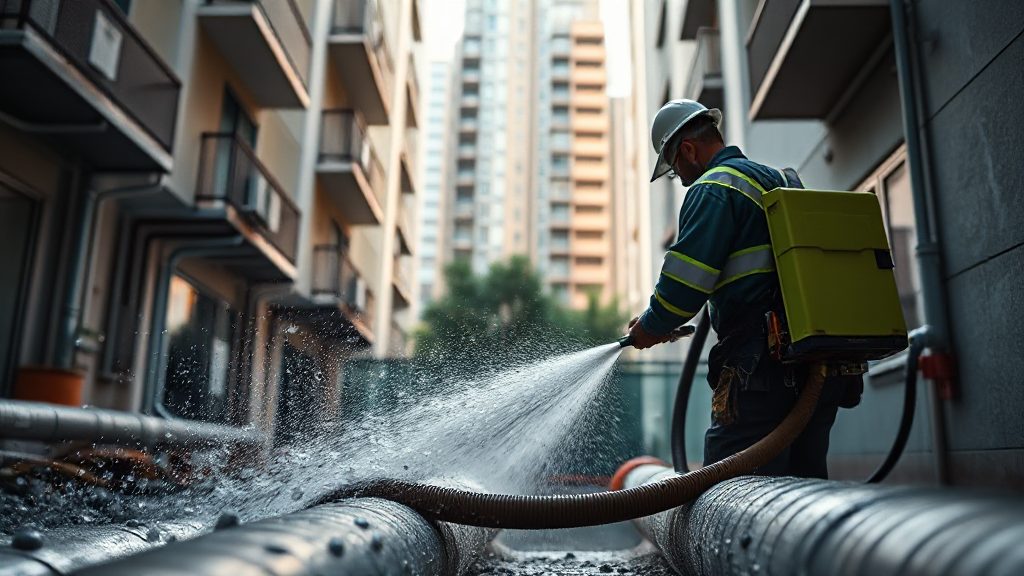
Finding the source is a process of elimination. A technician starts with the affected fixture, checks whether the blockage is local or in the branch, then tests the stack from a cleanout. Camera inspection and hydrojetting are common tools because they show the inside of the pipe instead of guessing.
In many cases, the clog is a combination: grease from one unit, wipes from another, and tree roots at a joint below the building. No single neighbor is to blame. That is why a desentupidora Freguesia do Ó should assess the whole line before recommending a fix.
What a proper inspection covers
- The fixture that overflowed and its branch line
- The vertical stack and its cleanouts
- The roof vent and any air admittance valves
- The building drain and the connection to the public sewer
Skipping any of these steps often leads to a temporary fix that fails again within weeks.
Shared Responsibility in a Low-Rise Building
In a condominium, the stack and the building drain are typically collective areas, while the branch inside your unit is private. That legal split is not a technical detail; it decides who authorizes the service and who shares the cost. When a backup affects several units, the conversation should move from blame to maintenance records.
Good practice is to document the inspection, keep the report, and schedule preventive cleaning of the stack before the rainy season. A desentupidora em Freguesia do Ó São Paulo SP can work with the síndico to plan this without waiting for an emergency.
What residents can do without touching the stack
Residents control what enters the branch: no grease down the sink, no wipes or hair in the toilet, and no food scraps in the drain. These habits reduce load on the shared stack. They do not replace maintenance, but they delay blockages and make them less severe.
| Area | Typical responsibility | Usual action |
|---|---|---|
| Inside the unit | Owner or tenant | Clear branch, replace trap |
| Vertical stack | Condominium | Inspect, hydrojet, repair joints |
| Building drain | Condominium | Preventive cleaning, camera survey |
Preventing the Next Backup Before It Starts
Prevention is cheaper than emergency repair and far less disruptive. A short annual inspection of the stack, combined with cleaning of the building drain, catches most problems while they are still small. In buildings with mature trees, root intrusion should be checked more often.
When a backup does happen, act quickly and keep the affected area clear. Do not pour chemicals into a shared stack; they rarely clear the real blockage and can damage pipes. Call a professional who can inspect the whole system and explain the cause in plain language.
Understanding the building as a system changes the conversation. The next time water rises in a drain that was fine yesterday, you will know it is probably not your plumbing alone. It is the stack, the vent, or the building drain doing what a shared system does when one part fails. With the right diagnosis and a maintenance plan, a Casa Verde low-rise can stay dry and predictable for every unit.